At a Glance
Before ordering custom logo T-shirts for your company, decide how the shirts will be used, choose a suitable fabric, prepare your brand guidelines and artwork, and confirm logo placement. Then compare embroidery, heat transfer, silkscreen and sublimation based on the design and garment. For bulk orders, check sizing, quantities, approval requirements and delivery dates before production.
1. Know your Materials
First things first. What kind of Tee shirt material will you be printing your logo with? Because the type of tees matter depending on what the custom logo tee shirts are for. Is it for Merch? Is it for an Event? Is it for the teams of sales reps?
Whatever it may be, it basically falls on this two widely used materials. Cotton or Polyester. A brief description that we can give for both is the cotton is comfortable and perfect for Casual wear but not good if it’s for an outdoor activity where it might get steamy hot because if that’s the case then a polyester material would look great plus you don’t have to iron it dries very fast.
For corporate orders, think about the actual working environment too. Cotton may suit everyday office or casual wear, while suitable moisture-wicking polyester styles may be more comfortable for outdoor events. Fabric blends are another option. Ask to check the specific garment’s feel, fit and care instructions before confirming a large quantity.
2. Copyright
If you intend to print some iconic logos like the Swoosh, the New York Yankees monogram or even a three stripe you will be asked to present an authorization or an approval for the use of such copyrighted brand marks.
Like some other customisation companies in Singapore, we are very strict on these kinds of things as we understand the importance of protecting the brand rights.
This also applies when a design uses a partner or sponsor logo. Before sharing artwork for production, confirm that your organisation has permission to reproduce any third-party marks.
3. Do you have a CI or the Corporate Identity Guidelines?
Nowadays, no matter how big or small the company is, they will always have a Corporate Identity Guideline. If you have a logo, chances are high that you have it.
This is something that gives anyone in your company or to any supplier you are working with know the rules and regulations of working with your brand when doing company tee shirts with logo.
If it seems like your company doesn’t have any CI at all, don’t feel bad. If you want to consider building your own CI, don’t hesitate to ask us about it and have a fruitful discussion with our design team to help you along the way.
If you have a brand guide, share the approved logo version, colour references, clear-space rules and any restrictions on placement. This helps your supplier prepare a mock-up that follows your company’s branding.
4. Logo Positions on a custom logo Tee shirt
Mostly everyone has an idea where to put their logos on a T-shirt. But for those who need assurance then we can share with you what they are. Prime spot will always be at the front. Across the chest if it’s a big one and on the left chest (where the heart is) if it’s a small and subtle logo.
People tend to look at that position. It’s quite visible even if you’re behind a counter, inside your car or in a Zoom video conference.
For event crews, a back print can make staff easier to identify from a distance. For client-facing teams, a smaller chest logo may create a more understated look. Check placement on each shirt size rather than relying only on a flat artwork preview.
5. Digitisation
Always keep in mind that wherever you go for an embroidery service, there will always be a one-time setup fee when digitizing your logo. What is digitisation? That’s the intricate process of converting your logo to embroidery format so that it can be mass-produced on polos, tees, caps, bags or wherever your heart desires.
Ask whether digitisation is required for your logo, whether there is a setup charge and whether an existing embroidery file can be reused for future orders. Charges and reuse arrangements depend on the supplier.
6. Know the restrictions of Embroidery on custom logo tee shirts
Now that you know something about digitisation, next thing you need to know is the restrictions of embroidery. Let’s say that your logo has a gradient, it won’t be translated well as an embroidery piece. So it would be best to consider printing instead.
Very small lettering and fine lines can also be difficult to reproduce clearly in thread. If your logo has intricate details, ask Ark to assess the design at the intended finished size before choosing embroidery.
7. Know the restrictions of Heat Press on custom logo tee shirts
Yes, even Heat-press has its restrictions. (which one doesn’t?). But of course it’s reasonable restrictions and are quite few. For example—if your artwork is very small and contains small, thin letters, the artwork will have a border offset (in a colour similar to the fabric). This is to prevent the small letters from falling off.
The result depends on the transfer material, artwork and fabric. Ask to review the expected finish, feel and care instructions, especially when the shirts will be worn and washed frequently.
8. Know the restrictions of Silkscreen Printing on custom logo tee shirts
Now, if you really have to print your artwork or your logo without any border offset, then what most suppliers will suggest is to go with Silkscreen. What’s great about silkscreen is it can handle those tiny details. It can even handle small grunge graphic effects without the risk of having the prints fall off. But one of the restrictions of silkscreen is that it is quite limited in terms of colour that means you cannot have gradients in your company tee shirt with logo as well.
Silkscreen printing can be worth considering for repeated company logos across a larger quantity of shirts. The suitability and cost depend on factors such as the number of print colours, artwork complexity, fabric and order volume. Detailed artwork should be checked with the printer rather than assuming every fine line will reproduce well.
9. Consider Sublimation Print
An alternative print method is Sublimation printing. Now this is where you can go all out in terms of customisation. To know more about Sublimation Print, you can check out our previous article about Sublimation Print.
Sublimation is generally associated with suitable polyester-based garments and can be useful for colourful, all-over designs. It is not the best option for every fabric or shirt colour, so check the garment specifications before choosing this method.
10. Put your logo on branded apparels
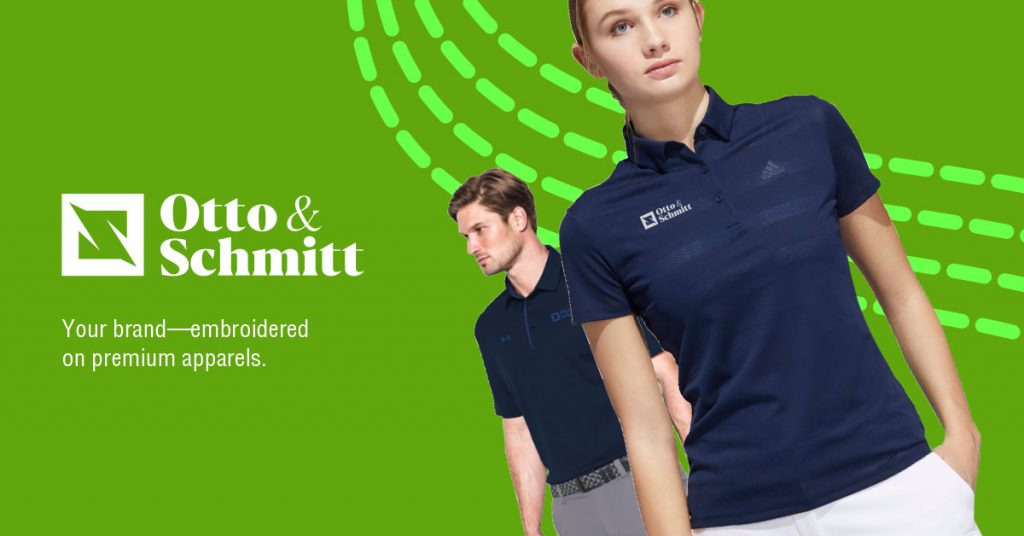
But of course, when in doubt, we recommend to go with a branded apparel. You can never go wrong and everyone in the team would love to wear that company tee shirt with logo! Wear the custom branded polo tee with pride and enjoy the comfortable, lightweight, moisture-wicking fabric.
For a company-wide order, choose a branded garment based on fit, available sizes, comfort, budget and how it will be used—not just the brand name. Check that your chosen style is suitable for the proposed logo application.
Before You Confirm Your Order
Have these details ready: the number of shirts required, size breakdown, preferred fabric or garment model, logo artwork (ideally in a vector format), print or embroidery positions, approved brand colours, and the date you need the shirts. If you are ordering for multiple departments or locations, confirm who will approve the artwork and final quantities.
Frequently Asked Questions
- What is the best material for company logo T-shirts?
It depends on use. Cotton may suit casual everyday wear, while suitable polyester performance fabrics may be more practical for active or outdoor settings. Compare the actual garments before ordering. - Should I choose embroidery or printing for my company logo?
Embroidery can give smaller logos a textured finish, while printing may be more suitable for certain larger, detailed or multicolour designs. The garment fabric and artwork should guide the choice. - What artwork file should I provide for logo T-shirt printing?
An original vector logo file, such as AI or EPS, is useful where available. Include approved colours and brand guidelines; your supplier can advise whether other formats are acceptable. - What should I confirm before placing a bulk order?
Confirm the size breakdown, logo placement, artwork proof, printing method, garment specifications, quantity, price and delivery schedule before authorising production.
Get Your Company Logo T-Shirts Started
Planning custom logo T-shirts for your staff, corporate event or team? Explore Ark’s T-shirt printing services and embroidery services. Send Ark your logo, estimated quantity and preferred delivery date through the contact page so the team can advise on a suitable garment and customisation method.